Last updated: 20 March 2026
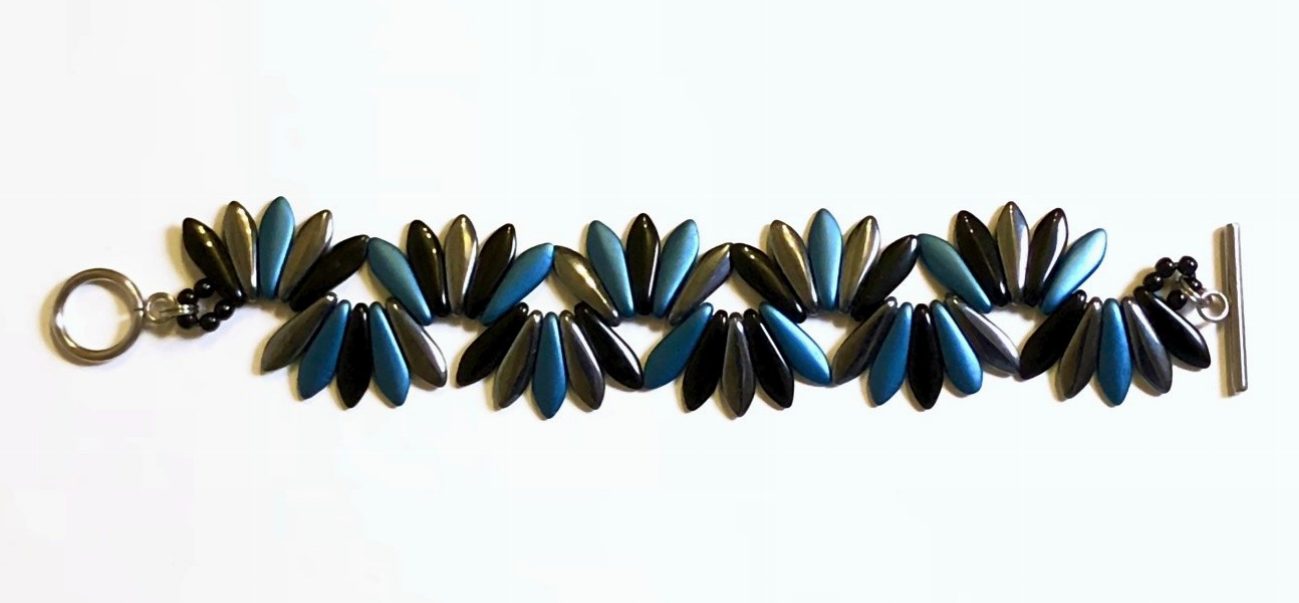
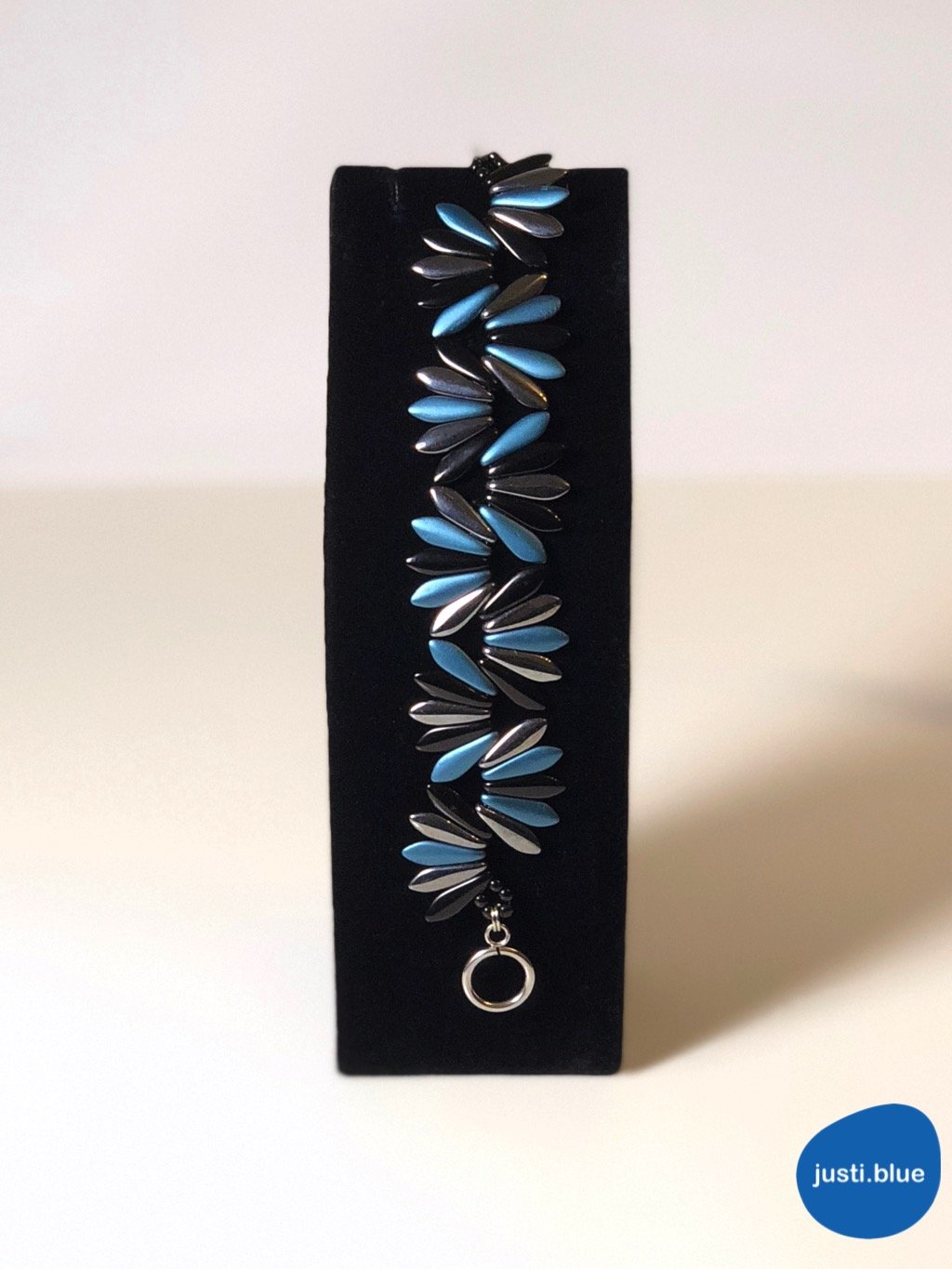
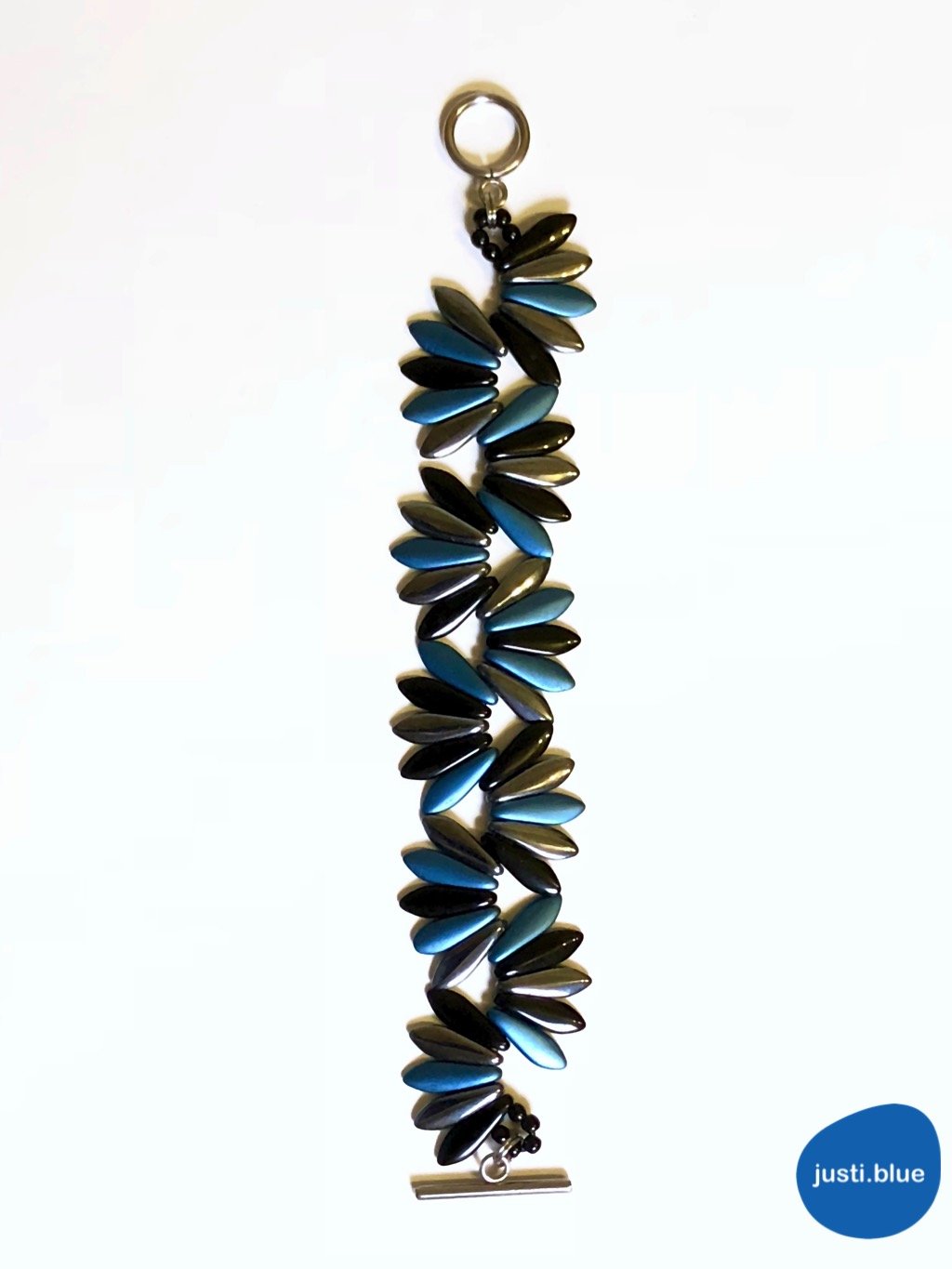
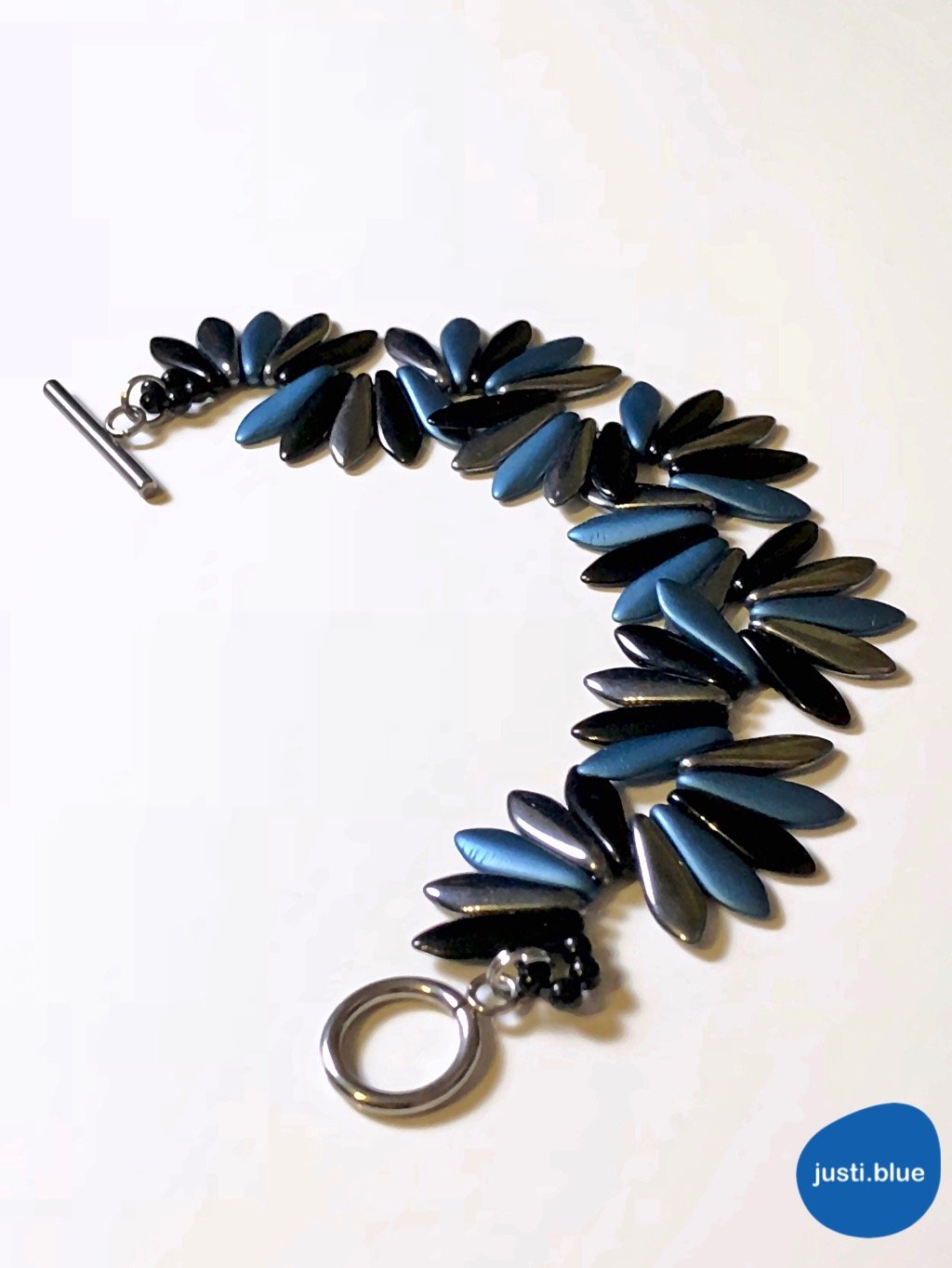
A wavy bracelet made from two-hole Dagger beads in black, hematite and sea blue. The wave pattern connects Dagger beads in alternating directions to create a flowing, organic shape.
What are Dagger beads?
CzechMates Dagger beads are elongated, dagger-shaped Czech pressed glass beads measuring 16 x 5 x 3 mm with two parallel 1.25 mm holes. The two holes let you stabilize the bead in one plane — unlike single-hole Daggers which tend to rotate freely.
I’d been mostly using round beads for bracelets. On a workshop at the Koralianki store in Poznań, we worked with Daggers for the first time. Their shape opens up different design possibilities compared to round or square beads.
How to connect Dagger beads together
After experimenting with these beads, I decided to make simple waves. Each wave row is connected to the next in the opposite direction. This creates a natural wavy shape that works well as a bracelet.
Materials
- CzechMates Dagger beads (16 x 5 mm, two-hole) — 3 colours: black, hematite, sea blue (1 packet each)
- Beading needle and thread (FireLine 6lb)
- Clasp
The result
FAQ
What is the difference between one-hole and two-hole Dagger beads?
One-hole Daggers rotate freely on the thread — they’re harder to control in structured patterns. Two-hole Daggers stay flat and stable, which makes them much easier to work with for bracelets.
Are Dagger beads good for beginners?
The bead shape is unusual, so there’s a learning curve. But the wave pattern used here is simple. If you’ve done any beadweaving before, you can handle it.
How long does this bracelet take?
The pattern is straightforward — expect about 2-3 hours once you understand how the waves connect.
Summary
- A wavy bracelet using two-hole Dagger beads in three colours
- Waves connect in alternating directions for a flowing organic shape
- Two-hole Daggers stay flat and stable — easier than single-hole versions
- Simple pattern, suitable after basic beadweaving experience
Sources
Software developer, bead artist and long-time LCHF (low carb, high fat) practitioner. Author of ketolabs.pl.
Be First to Comment