Last updated: 19 March 2026
Slack is a team communication tool that combines messaging, file sharing, voice calls and integrations with external tools like Trello and Google Docs. Here’s how my remote team uses it daily — pros, cons, and key features.
Pros and cons of Slack
Pros:
- Clean interface that teammates can adopt in minutes
- Simple to connect with external tools via webhooks and API — you can write your own plugins
- Web and standalone apps for Windows, Linux and macOS
- Searchable message history (paid plan)
Cons:
- Advanced features require a paid plan
- Can be heavy on memory — standalone app works better than the browser version
After using the free version for some time, we upgraded to Standard. We also connected Slack with Trello as one of our outgoing integrations.
@mentions — getting the right people’s attention
Use @channel or @here to notify all participants in a channel. Use @username to send a direct notification to one person.

Mentions work inside message bodies. If the person is offline, they get an email notification. One warning: don’t overuse @channel — it gets noisy fast.
Notifications — stay focused when you need to
You can snooze notifications or set quiet hours (e.g. after work). If somebody needs you urgently, Slackbot will let the notification through when they confirm it’s important.
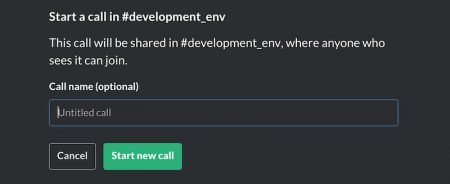
Voice calls for remote standups
Our team works remote. We use Slack as our conference room for weekly standups. Voice calls work well for this. Video calls are also available on paid plans.

File and document sharing
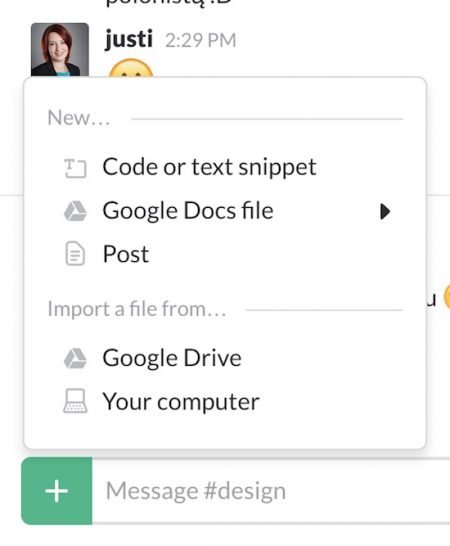
We use Google Docs for non-coding work. Slack makes it easy to collect and share links to important documents. With premium, all history is searchable.
Code snippets
Before Slack, we used Git snippets. Slack’s built-in snippet feature is faster — paste code directly, with syntax highlighting and raw content view.
Slack in 2026 — what changed
Since this article was first written in 2018, Slack was acquired by Salesforce in 2021. The core product remains largely the same. Slack now includes Huddles (quick audio calls without scheduling), Canvas (shared docs inside Slack), and AI-powered search.
Alternatives like Microsoft Teams and Discord have grown, but Slack remains the go-to choice for many dev teams. I still use it daily.
FAQ
Is Slack free?
Slack has a free tier with limited message history (90 days) and basic integrations. Paid plans (Pro, Business+, Enterprise) unlock full history, video calls, and advanced admin features. See Slack pricing.
How does Slack compare to Microsoft Teams?
Slack has a cleaner interface and better third-party integrations. Teams is tightly integrated with Microsoft 365 and better for organisations already in that ecosystem. For developer teams, Slack is usually preferred.
Can Slack replace email?
For internal team communication — largely yes. For external communication with clients and partners — not fully. Many teams use Slack internally and email externally.
Summary
- Slack is a team messaging tool with channels, mentions, voice calls and integrations
- Best for remote and dev teams — clean interface, code snippets, searchable history
- Free tier is limited (90-day history) — paid plans unlock key features
- Acquired by Salesforce in 2021, now includes Huddles, Canvas and AI search
- Still widely used in 2026, especially among developer teams
Sources

Software developer, bead artist and long-time LCHF (low carb, high fat) practitioner. Author of ketolabs.pl.
Be First to Comment